If you step back and evaluate the global financial markets from a systems perspective, you quickly realize that what we call “investing” has ceased to be an exercise in capital formation.
It has become a high-stakes, financialized shell game.
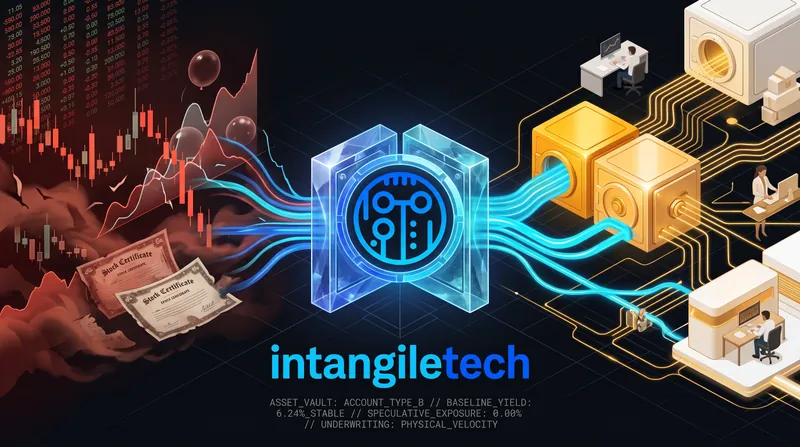
When an individual, an endowment, or a family office buys shares of a public company on a modern stock exchange, virtually none of that capital reaches the enterprise. The capital does not buy machine tools, it does not fund long-term laboratory research, and it does not compensate the engineers or assembly workers who build the products. It simply buys a paper certificate from another secondary market participant who purchased it five minutes or five months earlier.
Trillions of dollars of global liquidity circulate in this secondary trading loop, bidding up price-to-earnings multiples and generating fortunes for high-frequency trading firms and financial intermediaries—while the physical economy slowly decays.
To keep share prices inflating, corporate management is incentivized to cannibalize its own foundation. Chief executives borrow cheap money to buy back company shares, cut R&D budgets, outsource domestic manufacturing to fragile global supply chains, and treat experienced human builders as disposable expenses to beat quarterly earnings forecasts by two pennies.
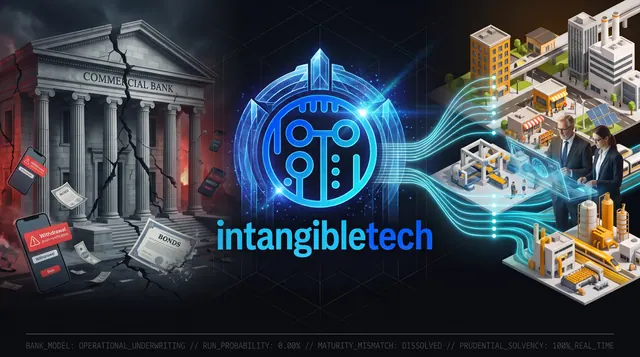
Meanwhile, savers seeking refuge in traditional safe-haven assets are trapped in a failing bond market. Sovereign debt has reached levels where governments can only service their liabilities through perpetual monetary debasement, guaranteeing that a ten-year or thirty-year Treasury bond delivers negative real returns after inflation and purchasing-power loss are accounted for.
The modern financial game is structurally diseased. It pits the investor against the worker, the executive against long-term resilience, and the saver against monetary reality.
At Intangible Technologies, I did not set out to banish the human desire to invest, take risk, and build wealth. Ambition and the pursuit of return are powerful drivers of human initiative.
Instead, we re-engineered the monetary physics of the game itself.
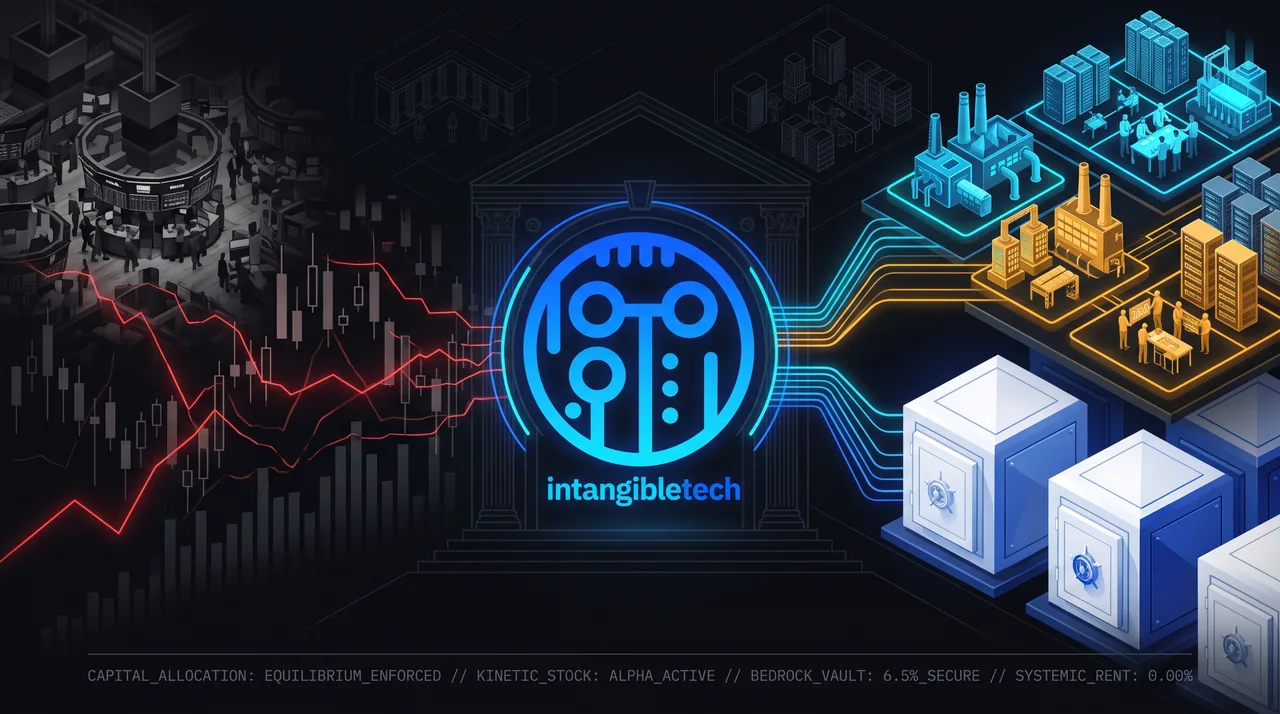
In our operating system, the rules of capital allocation are inverted. We replace speculative paper equity with Protocol-Native Kinetic Stock, establish Account Type B as an unbreakable haven superior to traditional bonds, and structure the monetary feedback loops so that playing the financial game to maximize personal wealth directly strengthens the stability, productivity, and health of the entire macroeconomy.
The Mindset Inversions Required to Play the New Game
To understand how to allocate capital in this system, you have to unlearn the habits of twentieth-century finance. The entire architecture rests on three fundamental mindset inversions:
Mindset Inversion 1: From Secondary Speculation to Kinetic Operational Liquidity
In the old game, you bought stock hoping someone else would pay more for your paper share tomorrow, regardless of whether the underlying company grew or deteriorated.
In the new game, backing an enterprise means provisioning primary liquidity directly into that company’s operational and settlement reserves. Your capital does not sit in an off-market custodian vault; it is immediately deployed into purchasing raw materials, securing high-speed compute, and funding guaranteed base wages for active builders. You are not trading dead receipts; you are capitalizing living, real-world throughput.
Mindset Inversion 2: From Backward Dividends to Real-Time Velocity Yield
In the old game, capital returns came from quarterly dividends—discretionary checks decided by a corporate board months after profits were booked, subject to accounting manipulation, tax drag, and executive whim.
In the new game, return on capital is realized as continuous velocity yield. As commercial transactions, supply-chain settlements, and customer invoices clear across native Automated Market Maker corridors in milliseconds, an atomic liquidity turnover fee routes instantly into your sovereign wallet in spendable fiat stablecoins. You don’t wait ninety days for a board meeting; your yield is paid every second that the business performs work.
Mindset Inversion 3: From Extractive Rent to Thermodynamic Service
In the old game, the most profitable strategy was often extractive: strip an acquired company of its assets, lever it with high-yield debt, lay off its senior staff, and extract special dividends.
In the new game, the protocol’s mathematical governors make extraction unprofitable. Gutting human talent or allowing operational defect rates to rise degrades the enterprise’s Impact Score Index, instantly spiking its borrowing rates and wiping out its yield margins.
To capture outsized wealth in this system, you must back organizations that deliver exceptional craftsmanship, durable engineering, and active human mentorship. The only path to personal alpha is creating real civilizational utility.
Arena One: Why Enterprise Kinetic “Stock” Is Lucrative and Worth Backing
A seasoned investor will look at this architecture and ask a straightforward question:
“If this system eliminates paper multiple expansion, speculative short squeezes, and financial engineering, how do I make serious returns? Why would I take risk on an enterprise kinetic stock instead of parking my money in a safe vault?”
The answer is simple: Kinetic stock is designed for growth, performance alpha, and uncapped commercial upside—grounded in real economic output rather than financial illusion.
Here is why backing an enterprise’s kinetic capital pool is an extraordinary investment vehicle:
1. High Velocity Turnover Multipliers
In our architecture, an enterprise’s yield is not constrained by static book value; it is powered by kinetic turnover velocity.
Consider a lean, high-performing enterprise—an advanced robotics manufacturer, a specialized artificial intelligence infrastructure firm, or an innovative medical diagnostic group.
If that company maintains a lean, efficient liquidity reserve while processing hundreds of millions of dollars in continuous commercial transactions, its velocity ratio is massive. Every dollar provisioned to that enterprise’s liquidity pool turns over multiple times every month, harvesting automated transaction fees on every loop.
For investors who identify high-efficiency, fast-moving enterprises early, the annualized kinetic yield paid directly to their wallets can comfortably reach twelve, eighteen, or twenty-five percent—paid not in speculative, volatile tokens, but in liquid, spendable currency earned from customer revenues.
2. The Compounding Upside of Defect Suppression
In legacy equity markets, when an engineering team refactors code or eliminates systemic manufacturing defects, that achievement is largely invisible to Wall Street analysts.
On our ledger, operational excellence is rewarded instantly.
When an enterprise’s hardware and software telemetry proves that its systems suppress defects below actuarial benchmarks, the protocol awards the company Loss-Mitigation Yield. The preserved operating margins expand the enterprise’s balance-sheet equity automatically.
Furthermore, as the enterprise’s Impact Score Index climbs, its borrowing costs drop, freeing up millions of dollars in unencumbered operating cash.
Investors who back disciplined, low-defect builders capture a double return: they receive the direct kinetic yield from commercial sales and benefit from the enterprise’s expanding capital capacity as its borrowing costs collapse.
3. Pure Operational Alignment
Why do founders, engineers, and executives welcome kinetic capital investors with open arms?
Because under this model, investors are true partners rather than predatory overseers.
- Investor capital does not dilute the founders’ voting control.
- It does not force the company into hostile takeovers or short-term share price panics.
- It directly funds the company’s operating runway, raw materials, and team payroll.
When the business succeeds, the investor captures continuous, automated cash flow; when the business faces a seasonal slowdown, the capital remains safe within reserve parameters rather than triggering an existential liquidity crisis. It is equity investment restored to its original, honest purpose: capitalizing real human enterprise.
Arena Two: Why Account Type B Obliterates the Legacy Bond Market
While enterprise kinetic stock is the engine for growth and alpha, Account Type B (The Productive Savings Vault) is the unyielding bedrock of the modern economy.
To understand why Account Type B is a breakthrough for wealth preservation, look at the catastrophic state of traditional fixed-income markets:
The Slow Death of the Traditional Bond
For generations, the bedrock of wealth management was the sovereign government bond or investment-grade corporate debenture. You bought a 10-year Treasury note, clipped a modest coupon, and slept soundly knowing your principal was safe.
Today, that promise is completely broken:
- Negative Real Yields: When nominal bond yields are 4% but real-world inflation in housing, energy, and healthcare is running at 7% or 8%, a bondholder is actively losing purchasing power every single year.
- Catastrophic Duration Risk: If interest rates rise to combat inflation, the market price of existing long-term bonds collapses. In 2022 and 2023, long-dated government bonds suffered historic drawdowns of 30% to 50%, wiping out trillions in institutional savings and bankrupting regional banks that held them on their balance sheets.
- The Sovereign Debt Death Loop: With national debts exceeding 120% of GDP and annual interest costs surpassing total defense budgets, sovereign governments cannot pay off their debt through tax revenues alone. They are mathematically forced to inflate their currencies, guaranteeing that the dollars returned to bondholders decades from now will be worth a fraction of their original value.
The traditional bond has transformed from a risk-free return into a return-free risk.
The Sanctuary of Account Type B
Account Type B provides an unshakeable, non-dilutive 4% to 8% baseline annual yield that makes legacy bonds obsolete.
LEGACY 10-YEAR GOVERNMENT BOND:
• Yield Source: Government power to tax and central bank debt printing
• Capital Risk: Severe duration haircuts if interest rates rise
• Real Return: Systematically negative against real-world inflation
• Liquidity: Locked for years; selling early triggers market losses
• Default Mechanism: Hidden currency debasement and purchasing-power loss
ACCOUNT TYPE B PRODUCTIVE VAULT:
• Yield Source: Real-world AMM turnover fees, prime credit spreads & infrastructure telemetry
• Capital Risk: Zero duration haircuts (principal does not trade on a secondary market)
• Real Return: Consistently positive (+4% to +8% net real spendable stablecoins)
• Liquidity: Fully senior; daily automated distributions directly to checking
• Default Mechanism: Impossible (backed by self-amortizing velocity and senior claims)
Look at the structural pillars that guarantee the security of Account Type B:
- Absolute Seniority Over All Risk: Account Type B depositors do not sit at the bottom of the corporate capital structure like common stockholders. They sit at the very top. Long before a company can realize operating profit or pay performance yields to kinetic stock holders, its commercial transactions must clear across protocol liquidity pools, and its senior working capital facilities must be serviced. Account Type B captures its yield first.
- Underwritten by Physical Production, Not Fiat Decrees: The yield does not rely on a politician’s promise to raise taxes or a central bank’s willingness to print money. It is backed by three diversified macroeconomic engines:
-
-
Kinetic Turnover Fees: Micro-fees harvested across global B2B trade and retail commerce moving through protocol AMMs.
-
Enterprise Credit Spreads: Dynamic interest paid by prime, low-defect corporations drawing self-amortizing working capital.
-
Telemetry-Metered Infrastructure: Silicon-attested cash flows generated by real physical assets—solar arrays, municipal transit grids, and hospital diagnostic tools doing useful work in the real economy.
-
- Zero Duration Haircuts and Daily Spendability: Because capital in Account Type B does not trade as a volatile paper bond on a speculative secondary exchange, it never suffers market drawdowns. One dollar in Account Type B is always one dollar. Furthermore, your yield does not arrive twice a year via a paper coupon; it streams daily in primary fiat stablecoins directly into your liquid operating wallet. You can immediately use that income to buy groceries, cover living costs, or reinvest without touching your underlying principal.
For retirees, family offices, sovereign wealth funds, and corporate treasurers, Account Type B represents what modern finance failed to deliver: an honest, inflation-protected, risk-free haven that compounds real wealth across generations.
How the Game Balances Itself: The Macroeconomic Self-Balancing Loop
Now we arrive at the core economic breakthrough of our system.
In legacy finance, when investors chase hot trades, the system destabilizes. Capital rushes into speculative bubbles, starving vital industries of funding, driving up the cost of living, and culminating in devastating market crashes.
What happens in the Intangible Architecture when market participants play the game? What happens if millions of investors decide to abandon safe Account Type B vaults to chase lucrative yields in individual enterprise kinetic stocks?
Does it trigger a liquidity famine? Does it crash the economy?
No. The protocol’s monetary physics enforces automatic, counter-balancing feedback loops that make over-concentration mathematically self-correcting—turning private ambition into collective systemic stability.
Look at how the economic engine self-balances across three distinct phases:
PHASE 1: CAPITAL SURGE INTO KINETIC STOCK
Investors flood capital into high-growth enterprise pools chasing alpha
PHASE 2: THE AUTOMATIC STABILIZERS ENGAGE
• Kinetic Stock Yield Dilutes: Denominator expands while physical sales grow at real-world pace
• Account Type B Yield Spikes: Reserve liquidity tightens; prime credit spreads widen toward 8%
• Rational Capital Pivots: Allocators rebalance out of diluted “stocks” back into high-yielding Type B
PHASE 3: THE RECIRCULATION TIDAL WAVE
Enterprise deploys capital into operations by streaming base wages & invoices to workers (Account Type A)
Surplus balances cross $100k floor resulting in deposits going directly into Account Type B to earn 4-8%
Feedback Loop 1: Natural Kinetic Yield Dilution
If investors get euphoric and flood an enterprise with $100 million of capital when the business only has the operational capacity to process $10 million in commercial transactions, the protocol does not inflate a paper share price.
The yield calculation handles this automatically: because the pool of invested capital exploded while the company’s real-world physical sales grew at a normal pace, the kinetic yield per dollar invested instantly dilutes from 15% down to 2%.
You cannot manufacture synthetic returns through hype. The moment investors over-allocate capital beyond what a company’s physical operations can support, their returns compress naturally, signaling that the enterprise is fully capitalized.
Feedback Loop 2: The Widening Spread Magnet in Account Type B
Simultaneously, because capital rushed into individual enterprise stocks, the supply of generalized reserve liquidity in Account Type B tightens.
As reserve capital becomes scarcer while borrowing demand across the broader economy remains steady, protocol credit spreads naturally expand. The yield on Account Type B climbs toward the top of its band—reaching 7% or 8%.
Capital allocators look across the market and see a clean, rational choice:
- A high-risk, single-company stock that has been diluted down to a 2% yield.
- An unshakeable, senior Account Type B vault offering an un-diluted 8% yield backed by diversified global commerce.
Without a single central banker uttering a word, and without a single regulatory mandate, rational capital pivots on its own. Billions of dollars flow out of over-capitalized enterprise pools and back into Account Type B, replenishing the economy’s reserve foundation.
Feedback Loop 3: The Recirculation Tide (How Stock Feeds Savings)
Where did the capital invested in enterprise stock actually go?
It did not vanish into thin air. The enterprise used that liquidity to buy raw materials from industrial suppliers, lease high-performance server clusters, and disburse guaranteed base salaries (OpEx) to its software architects, machinists, and engineers.
That capital flowed straight into the Account Type A (Operating Wallets) of real working human beings and vendor businesses.
What do those workers and suppliers do with their money?
- They pay their living expenses, buy food, and manage daily operations.
- Any accumulated surplus above their generous Citizen Exemption Floor ($100,000) cannot sit idle without facing continuous demurrage.
- To protect and grow their personal savings, they deposit that surplus directly into Account Type B, locking in safe, non-speculative 4% to 8% yield.
The loop is complete. Capital invested in the ambitious growth of individual enterprises flows directly through the physical economy, pays real human wages, generates transactional velocity, and sweeps right back into Account Type B vaults as permanent, productive savings.
The system feeds itself. Growth fuels security, security underwrites growth, and capital never stagnates inside a paper casino.
Aligning Self-Interest with the Flourishing of Civilization
In 1776, Adam Smith wrote of the “invisible hand”—the idea that an individual pursuing their own self-interest could unintentionally promote the broader welfare of society.
For two centuries, that ideal was undermined by the plumbing of our financial system.
We operated on an architecture where an individual pursuing maximum profit was rewarded for stripping physical assets, exploiting working families with compounding usury, firing senior builders, and gambling in secondary paper markets. The invisible hand was corrupted because the ledger rewarded destruction over creation.
Intangible Technologies restores that missing alignment.
We did not build an economic system that demands self-sacrifice or altruism. You are free to be ambitious. You are free to seek outsized returns. You are free to play the financial game to build immense wealth for yourself and your family.
We simply aligned the physics of the game with the laws of physical reality:
- If you want aggressive growth and alpha, you must back real enterprises that build durable products, suppress operational defects, and treat human craft with dignity.
- If you want peace of mind and generational wealth preservation, you must capitalize the productive reserve bedrock that underwrites the physical operations of society.
- And whichever path you choose, the monetary feedback loops of the protocol ensure that your capital moves real physical atoms, pays living human wages, and strengthens the economic fabric of the world.
The era of paper speculation is coming to a close.