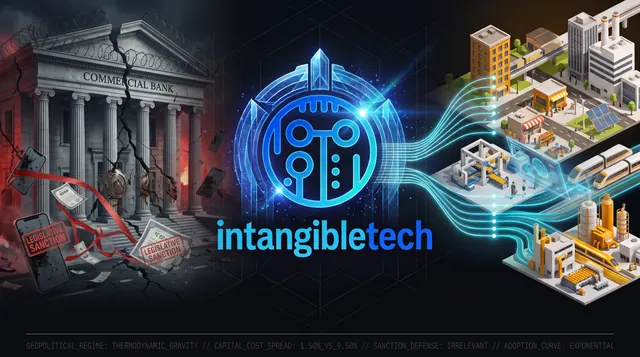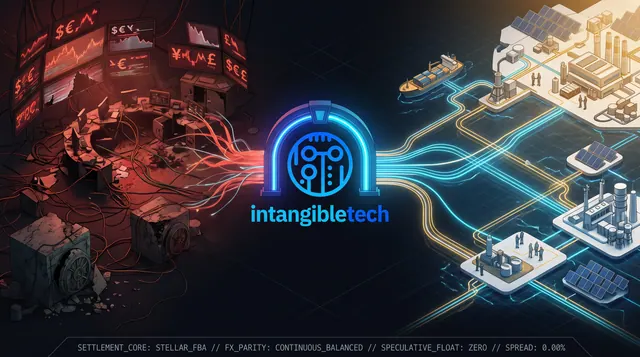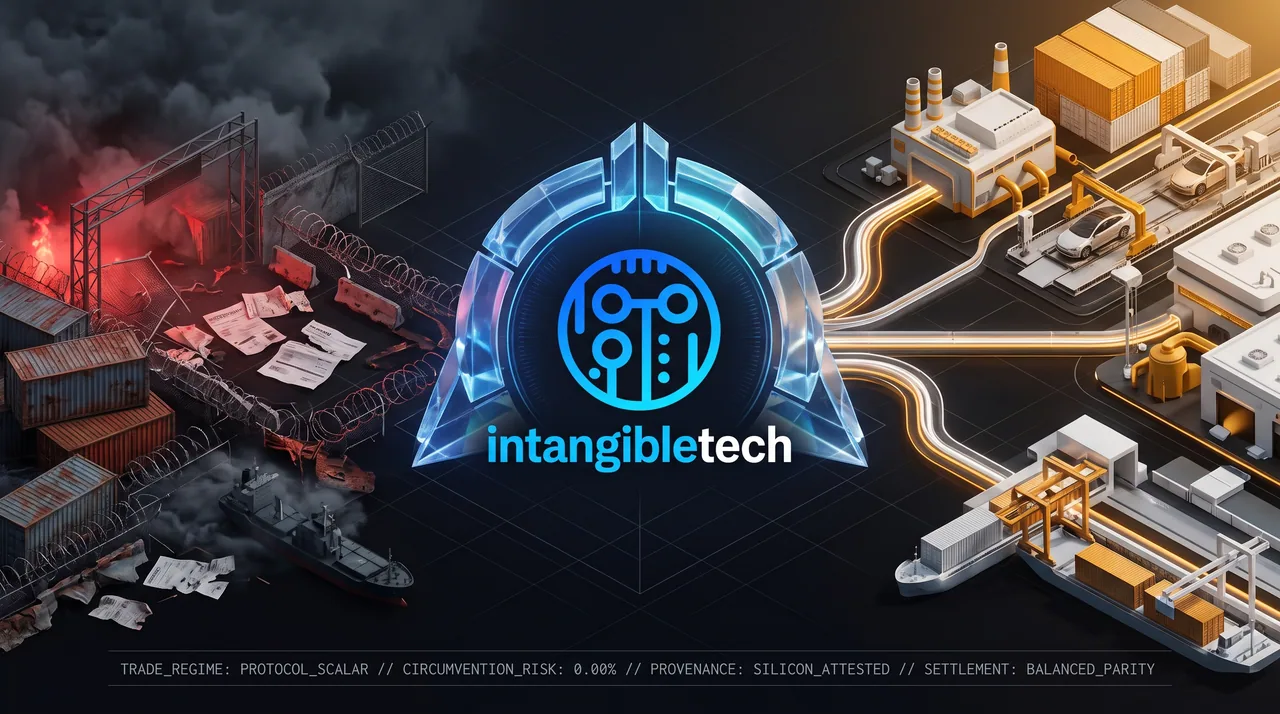
If you want to understand why modern civilization feels economically unmoored, do not look first at the stock market. Look at the physical world.
Look at a barrel of crude oil pumped from the Permian Basin, a bushel of winter wheat harvested in Kansas, a metric ton of copper pulled from a Chilean pit, or a container of liquefied natural gas traversing the Atlantic.
These are not financial abstractions. They are the physical atoms, calorific energy, and essential nutrients upon which eight billion human lives depend. Without them, transportation halts, electrical grids collapse, and cities starve.
Yet over the past forty years, the global commodity markets—the institutional mechanisms designed to clear and distribute these physical necessities—have been hijacked by financial engineering.
Today, on international futures exchanges, the volume of paper oil contracts traded every day routinely exceeds the volume of actual physical crude oil pulled from the earth by twenty to thirty times.
Think about the absurdity of that reality.
For every real, physical tanker ship loaded with oil, twenty-nine ghost ships exist only as paper claims in high-frequency trading servers. Algorithmic hedge funds, speculative commodity index funds, and investment bank trading desks buy and sell these synthetic contracts in milliseconds. They will never take physical delivery of a single drop of diesel, a pound of copper, or a bushel of corn.
The consequences for the real economy are devastating:
- The Squeeze on Physical Producers: When geopolitical headlines trigger sudden price swings, real-world farmers, municipal utilities, and independent drillers are blindsided by billions of dollars in sudden margin calls on their routine hedging positions. During the European energy crisis, several major, century-old utilities were pushed to the brink of insolvency not because their power plants failed, but because paper derivative exchanges demanded billions in cash collateral overnight.
- Artificial Volatility for Working Families: When financial speculators pour billions into commodity index funds as an “inflation hedge,” food and fuel prices surge at the pump and the grocery store, regardless of whether actual physical supplies are abundant.
- The Weaponization of Scarcity: Geopolitical powers exploit opaque, centralized shipping channels and clearing systems to manipulate supply, leaving emerging nations vulnerable to sudden shortages.
The original purpose of commodity markets has been inverted.
They were invented to protect physical producers from volatility. Today, they are volatile casinos that force physical producers to gamble just to survive.
To build an economic operating system anchored in reality, we must bring the commodity complex back to the bedrock of atoms.
By replacing speculative derivative trading with protocol-native thermodynamic clearing, Intangible Technologies provides an un-cheatable architecture where physical resources are accurately valued, energy producers are rewarded for operational precision, conventional safe havens find their true functional role, and digital assets are stripped of speculative frenzy.
1. The Historical Inversion: How Insurance Mutated into a Paper Casino
To fix the commodity markets, we must remember why they were established in the first place.
In 1848, a group of grain merchants in Chicago founded the Chicago Board of Trade (CBOT). Their problem was simple and physical:
- Every autumn, Midwestern farmers brought their harvests to town at the exact same time. The sudden glut of wheat caused local grain prices to collapse, forcing farmers to sell at catastrophic losses or let crops rot in the mud.
- By winter, wheat was scarce, and bread prices in cities skyrocketed.
The solution was the Forward Contract, which evolved into the Standardized Futures Contract:
- A farmer could lock in a price in the spring to deliver wheat in the autumn.
- A flour mill could lock in its purchasing cost six months in advance.
It was a brilliant innovation. The futures market served as a physical insurance mechanism. It transferred price risk from people who grew food to merchants willing to hold the risk, ensuring a predictable food supply for a growing nation.
The system worked as intended for more than a century because it remained tightly bound to the logistics of physical delivery.
The Financialization Break
In the 1990s and early 2000s, everything changed. Regulatory protections—such as position limits that prevented speculators from dominating physical markets—were methodically dismantled by legislation like the Commodity Futures Modernization Act.
Wall Street discovered that commodities could be repackaged as an uncorrelated “asset class.” Pension funds and hedge funds began allocating hundreds of billions of dollars to passive commodity index funds. Simultaneously, high-frequency algorithmic trading desks moved in.
The market detached from physical reality:
- Trading ceased to be about coordinating physical grain elevators or oil refineries.
- It became a game of betting on the paper momentum of contracts that are continuously rolled over before expiration.
- Financial capital completely overwhelmed commercial capital.
The physical producer—the cattle rancher, the mining engineer, the independent energy operator—was reduced to a captive bystander in a market supposedly built for them.
2. The Mental Inversion: Commodities as Thermodynamic State Vectors
To correct this distortion, executives and economists must make a fundamental mental pivot:
Stop viewing commodities as financial derivatives to be traded on paper. Start viewing commodities as physical thermodynamic state vectors clearing across an authenticated supply chain.
In the physical universe, a barrel of crude oil is not an arbitrary financial asset. It is approximately 5.8 million British Thermal Units (BTUs) of chemical energy.
A metric ton of high-grade copper cathode is not a ticker symbol on a monitor; it is a critical conductor of electricity with specific conductivity, tensile strength, and atomic purity.
In the Intangible Architecture:
- We discard the idea that a financial exchange should trade synthetic claims detached from physical settlement.
- We treat commodities through the lens of Material Provenance and Thermodynamic Throughput.
When commodities move through our Layer-0 execution engine and anchor to the Stellar network, the transaction is not a paper bet. It is the cryptographic registration and real-time clearance of physical custody, calorific density, and delivery velocity.
Paper contracts and physical reality are brought back into a mandatory 1:1 parity. You cannot sell thirty phantom barrels of oil on our ledger; you can only clear and settle the physical energy that is verified by hardware roots of trust on the ground.
3. Fossil Fuels: Facing Baseload Reality Without Ideological Illusions
A central blind spot in modern environmental discourse is the naive assumption that industrial civilization can simply switch off fossil fuels overnight through regulatory decrees or marketing campaigns.
Let us be completely candid: Fossil fuels are not going away anytime soon.
Oil, natural gas, and coal provide the foundational baseload energy, heavy transportation fuel, high-heat industrial processing, and petrochemical feedstocks that keep eight billion human beings alive. To demand their immediate elimination without viable, scalable replacements is an ideological fantasy that leads straight to rolling blackouts, industrial collapse, and human misery.
Yet the legacy economic system handles fossil fuels terribly:
- Under GDP and legacy accounting, oil companies are incentivized to maximize short-term volume extraction while externalizing environmental damage onto the surrounding commons.
- Modern Corporate ESG frameworks swung to the opposite extreme: punishing energy producers through arbitrary banking boycotts, while rewarding tech conglomerates that merely outsource their dirty computing footprints to unmonitored grids.
The Intangible Architecture replaces both of these broken extremes with Thermodynamic Truth.
LEGACY FINANCIAL REGIME:
Hydrocarbon Valuation = Opaque Paper Speculation & Geopolitical Monopolies
Corporate Incentive = Pump Maximum Volume; Externalize Environmental Waste
ESG Reaction = Punitive Banking Bans & Marketing Theater
Result: High Consumer Volatility, Systemic Flaring Waste, Brittle Energy Grids
INTANGIBLE ARCHITECTURE:
Hydrocarbon Valuation = Verifiable Calorific Output & Operational Precision
Corporate Incentive = Minimize Entropy Drag; Capture & Convert Waste Gas
Protocol Response = Dynamic ISI Scoring Slashes Borrowing Costs for Clean Execution
Result: Reliable Baseload Energy, Rapid Infrastructure Modernization, Zero Ideological Theater
How Fossil Fuels Operate in the New System
1. Energy Production is Valued as Productive Work
Under our macroeconomic governor, Kinetic Systemic Throughput (KST), producing reliable electrical baseload and transportation energy is recognized as genuine physical work that lowers systemic entropy.
An energy company that delivers high-density, reliable power to an industrial cluster is directly contributing to national kinetic throughput.
2. The Entropy Drag Penalty (Eliminating Waste, Not Baseload)
Where the protocol intervenes is on avoidable thermodynamic waste:
- If an oil and gas operator flares billions of cubic feet of natural gas at the wellhead because connecting a pipeline is an inconvenient upfront cost, that flaring is detected via satellite and hardware flowmeters.
- In legacy accounting, flared gas is treated as an invisible zero-cost externality. On our ledger, venting or flaring usable energy registers as a severe Entropy Drag Penalty on the company’s operational state vector.
- That drag depresses the operator’s Impact Score Index (ISI), automatically raising its borrowing costs across its working capital facilities.
3. Rewarding Engineering Excellence
Conversely, if an oil and gas company invests in vapor-recovery systems, converts wellhead waste gas into on-site compute power, or optimizes drilling motors to prevent methane leakage, its operational defect rate drops.
- Its ISI climbs rapidly.
- The protocol rewards that engineering discipline by compressing its corporate borrowing rates from 8% down to 1.5%.
The energy company is not demonized for producing oil; it is economically rewarded for running a tight, disciplined, low-waste engineering operation.
The transition to cleaner energy occurs not through bureaucratic mandates, but through the natural laws of capital efficiency.
4. Why Legacy Energy and Mining Conglomerates Will Lead the Shift
A vital question for any institutional strategist is:
“Why would a multi-billion-dollar oil major, a global mining conglomerate, or a multinational grain trading house want to join this system if it eliminates paper speculation?”
Traditional commodity giants do not make their primary money from speculative trading; they make it from producing, refining, and transporting physical materials.
In fact, the financialization of commodities has become an operational nightmare for these companies. They will eagerly transition to this architecture for three compelling, bottom-line reasons:
1. Eliminating the Multi-Billion-Dollar Derivative Liquidity Drain
Today, an energy major like ExxonMobil, Chevron, or Shell spends tens of millions of dollars each year paying investment bank dealers to structure complex derivative hedges, and they must hold billions of dollars in liquid cash reserves solely to satisfy exchange margin requirements.
On our settlement rails, commercial transactions settle in sub-second finality across native Automated Market Maker (AMM) pools on the Stellar network.
Because prices settle against real-time physical throughput and currency conversions occur atomically at mathematical par, the need for complex, multi-year paper hedging derivatives disappears. Energy majors can redeploy tens of billions of dollars in trapped margin cash back into real-world production, research, and infrastructure.
2. Sashing Working Capital Costs from 8% to 1.5%
Heavy industry is intensely capital-intensive. Building a liquefied natural gas export facility, developing an offshore energy field, or constructing a copper refining facility requires billions in upfront debt financing.
Under the legacy banking regime, commodity producers are subject to volatile corporate bond markets and bank syndicates that charge 7% to 9% interest.
Under our ledger, a commodity conglomerate that connects its operations to Layer-0 hardware roots of trust—proving high equipment uptime, low defect rates, and disciplined environmental management—unlocks the Impact Score Index (ISI) Spread Arbitrage.
Its corporate borrowing spread compresses to the prime 1.0% to 2.0% tier. On a five-billion-dollar infrastructure project, cutting financing costs by five percentage points saves two hundred and fifty million dollars in cash debt service every single year.
3. Sub-Second Trade Finance Without Bank Tolls
International commodity trade moves on letters of credit, bills of lading, and maritime escrow accounts managed by global banks. A single cargo of crude oil or iron ore can take weeks to clear administratively, with banks taking one to three percent in financing tolls and currency exchange fees.
On our rails:
- Cargo manifests are bound to containerized capability nodes.
- When the vessel docks and the transfer flange locks onto the receiving terminal, physical flowmeters sign the custody transfer in silicon.
- Opcode 0x01 executes an immediate, atomic settlement in under four seconds.
The buyer gets verified physical energy; the seller gets fully cleared, un-leveraged funds in their sovereign vault. The multi-week administrative lag and bank tolls evaporate.
5. Gold and Precious Metals: The Evolution of the “Safe Haven”
For five thousand years, gold has stood as the ultimate safe-haven asset.
Why did gold hold this position? Not because it produced economic output, but because it solved a critical information problem in an analog world:
- It was chemically un-counterfeitable and scarce.
- It carried zero counterparty risk; a gold bar in your hand did not depend on the solvency of a king, a government, or a commercial bank.
Whenever societies debased their fiat currencies, ran unsustainable public debts, or engaged in geopolitical adventurism, rational human beings fled to gold to preserve their purchasing power.
Yet legacy finance transformed gold into a sterile, defensive bunker:
- Gold sits in a deep subterranean vault. It does not run factories, it does not power grids, and it produces zero economic yield. In fact, holding it costs money in insurance, security, and physical storage.
- Furthermore, legacy paper markets corrupted gold just as they did oil: the volume of “paper gold” (unallocated bank accounts, futures contracts, and synthetic ETFs) vastly exceeds the physical gold sitting in vaults, creating an artificial paper price that is routinely manipulated by bullion bank trading desks.
THE LEGACY FEAR PARADIGM:
The Crisis: Unbacked Fiat Debasement & Bank Run Vulnerability
The Refuge: Sterile Gold Bullion in a Vault (0% Yield; High Storage Costs)
The Paper Trap: 100x Synthetic Paper Gold Suppresses True Price Discovery
THE PROTOCOL PRODUCTIVE PARADIGM:
The Crisis Solved: Unbacked Money Printing Eradicated by Protocol Physics
The Primary Refuge: ACCOUNT TYPE B (4% to 8% Senior Productive Yield)
The Role of Gold: Attested Physical Collateral in Layer-0 Liquidity Reserves
The Inversion: Gold as Attested Reserve, Not Idle Fear
In the Intangible Architecture, the concept of the safe haven undergoes a profound evolution:
1. Gold Reclaims Physical 1:1 Integrity
On our ledger, gold cannot be synthetically fractionalized.
If a depository issues a gold-backed capability token on the Stellar network, every single milligram is cryptographically bound to a physical bar audited via tamper-evident hardware vaults. The multi-trillion-dollar paper gold shell game is eliminated. Gold’s price reflects true physical supply and industrial demand.
2. The Superior Safe Haven: Account Type B
While physical gold preserves historical purchasing power, it is no longer the premier safe-haven asset for civilization.
In the legacy world, people fled to gold because productive investments were too risky: stocks were volatile and bank deposits were exposed to fractional-reserve insolvency.
Under our ledger, we engineered Account Type B (Senior Productive Reserves):
- Account Type B is senior to all corporate equity and protected from market speculation.
- It earns four to eight percent non-dilutive, real yield generated by the verified kinetic turnover of the real physical economy—underwriting clean water systems, high-speed rail, precision manufacturing, and essential supply chains.
- It carries zero fractional-reserve bank run risk because it does not engage in maturity transformation.
Why would a family, a sovereign wealth fund, or an enterprise park their entire wealth in a sterile, non-yielding metal in a vault when they can park it in an unassailable, senior reserve that preserves purchasing power while earning four to eight percent real, spendable yield backed by the physical infrastructure of human civilization?
Gold remains an honorable, physical reserve metal. But it shifts from a fear-driven bunker into an active, verified collateral asset within the protocol’s liquidity plumbing.
6. Cryptocurrencies: From Meme Casinos to Verifiable Economic Utility
Over the past fifteen years, the rise of cryptocurrencies and Web3 provided a brilliant diagnosis of legacy fiat corruption, but delivered a profoundly flawed cure.
Early crypto pioneers correctly identified that centralized fiat currencies were vulnerable to debasement, political weaponization, and systemic banking bailouts.
Yet look at what the cryptocurrency market became:
- An unconstrained, nine-thousand-token speculative casino dominated by meme coins, unbacked algorithmic stablecoins, wash-trading exchanges, and predatory token launches.
- The overwhelming majority of crypto tokens possess zero real-world economic utility. They are circular financial instruments: their value exists solely because speculators hope to sell them to a greater fool tomorrow at a higher price.
- When liquidity dries up, the entire speculative apparatus implodes, destroying tens of billions in retail savings in collapses like FTX, Terra-Luna, and Celsius.
The Intangible Architecture ends this cycle of speculative delusion.
It does not destroy digital assets; it strips them of speculation and forces them to be valued on their true, verifiable economic utility.
The Inversion: Utility Equals Velocity and Security
In our framework, a digital asset cannot maintain an arbitrary multi-billion-dollar valuation based on marketing hype, whitepaper promises, or artificial token burns:
- Valuation Tied to Throughput: An asset’s real-world value is dictated by the observable transaction velocity (Vt) and physical commercial settlement that actually flows through its liquidity reserves. If an asset clears no real-world commerce, funds no physical machinery, and settles no human invoices, its economic value on our ledger decays to zero.
- The Death of Regulatory Arbitrage: The wild west era of anonymous, wash-traded crypto tokens clearing outside the bounds of human law is coming to a structural end. On our settlement layer, capital participants maintain authenticated Sovereign Digital Identities (SIDs). The system is fully compliant with sovereign capital regulations, international anti-money laundering (AML) protocols, and counter-terrorist financing rules, while preserving personal cryptographic privacy through zero-knowledge computation.
THE MEME CASINO (WEB3 / SPECULATION):
Value Driver: Social Media Hype, Artificial Scarcity, Greater Fool Theory
Underlying Asset: Unbacked Governance Tokens & Memes
Settlement: Slow, Vulnerable to MEV Front-Running & Smart Contract Hacks
Outcome: Boom-and-Bust Bubbles; Catastrophic Retail Losses
THE INTANGIBLE PARADIGM:
Value Driver: Verified Operational Turnover & Physical Commercial Utility
Underlying Asset: Protocol-Native Reserves & Attested Infrastructure Capital
Settlement: Sub-Second, Deterministic Finality on Stellar Rails (Zero MEV)
Outcome: Stable, Predictable Purchasing Power; Legitimate Capital Coordination
7. The Gravity Well: Why Loopholes Close and Shadow Rails Fail
A final, natural question from seasoned regulators, compliance officers, and institutional leaders is:
“What stops bad actors, tax evaders, or rogue commodity traders from simply bypassing this system entirely? Why wouldn’t they continue trading off-chain using shadow banking networks or unregulated crypto tokens?”
The answer is not political force; it is the unyielding physics of Liquidity Gravity and Asymmetric Risk.
In economics, capital follows the path of least resistance, lowest cost, and highest return. Our architecture does not have to ban shadow transactions; it makes transacting outside the system economically unviable through three insurmountable structural realities:
1. The Cost of Capital Arbitrage
A company transacting inside our architecture borrows working capital at 1.0% to 2.0% because its operations are attested, low-defect, and transparent on Layer-0.
A rogue operator trading in the unregulated shadows or using legacy offshore banking must borrow at 10% to 15% to cover counterparty risk, intermediary bank fees, and legal vulnerability.
Over a multi-year horizon, an enterprise paying ten percent for capital cannot compete with an enterprise paying one percent. The shadow operator is driven into bankruptcy by pure financing math.
2. The Threat of Down-Graph Slashing
What happens if an enterprise transacting on our ledger tries to secretly purchase commodities from an unverified, shadow supplier off-chain?
Every enterprise on our ledger maintains an active Impact Score Index (ISI) that dictates its commercial status.
- If a company attempts to introduce untracked materials into its production line, the physical discrepancy between reported component provenance and automated sensor measurements is detected instantly.
- The moment this discrepancy is verified by consensus, the protocol executes Down-Graph Slashing: the enterprise’s ISI is downgraded, its credit facilities surge from 1.5% to 12%, and its executives face permanent provenance penalties.
- No Fortune 500 company or sovereign supplier will risk a tenfold spike in its cost of capital to save a few pennies in a gray-market back channel.
3. Absolute Settlement Security vs. Infinite Shadow Risk
If you transact on unregulated, shadow crypto rails, you are exposed to smart contract hacks, exchange insolvencies, frozen stablecoins, and total legal abandonment if your counterparty defaults.
On our settlement rails, settlements clear natively on the Stellar network in three to five seconds with mathematical finality, zero front-running, and sovereign compliance primitives.
Legitimate, multi-billion-dollar global commerce will always choose absolute certainty, near-zero cost, and sub-second settlement over the dangerous, volatile waters of unregulated shadow casinos.
The loophole closes not with a police raid, but with a better economic engine.
The Recovery of the Physical World
For nearly half a century, our civilization has lived under the spell of financialization.
We allowed an elite class of financial engineers to convince us that wealth consists of numbers in private bank spreadsheets, paper options on physical barrels, and synthetic bets on synthetic debts. We watched as the real builders of our world—the farmers who feed us, the miners who extract the metals for our clean energy, and the energy operators who keep the lights burning in our cities—were subordinated to speculators trading paper claims.
It was an unsustainable detour in human history.
The Intangible Architecture closes that detour permanently.
By bringing commodity markets back to the bedrock of atoms, holding energy producers to the unyielding standards of thermodynamic efficiency, elevating gold and safe havens to their true structural purpose, and demanding that digital assets reflect real human productivity, we restore the foundational balance of our economy.
We deliver a world where:
- The physical producer is celebrated and protected.
- Baseload energy is recognized as the lifeblood of civilization.
- Paper speculation is replaced by real-world kinetic velocity.
- And human ingenuity is once again aligned with the enduring, physical laws of the universe.
The paper casino has had its day.
The era of reality has arrived.